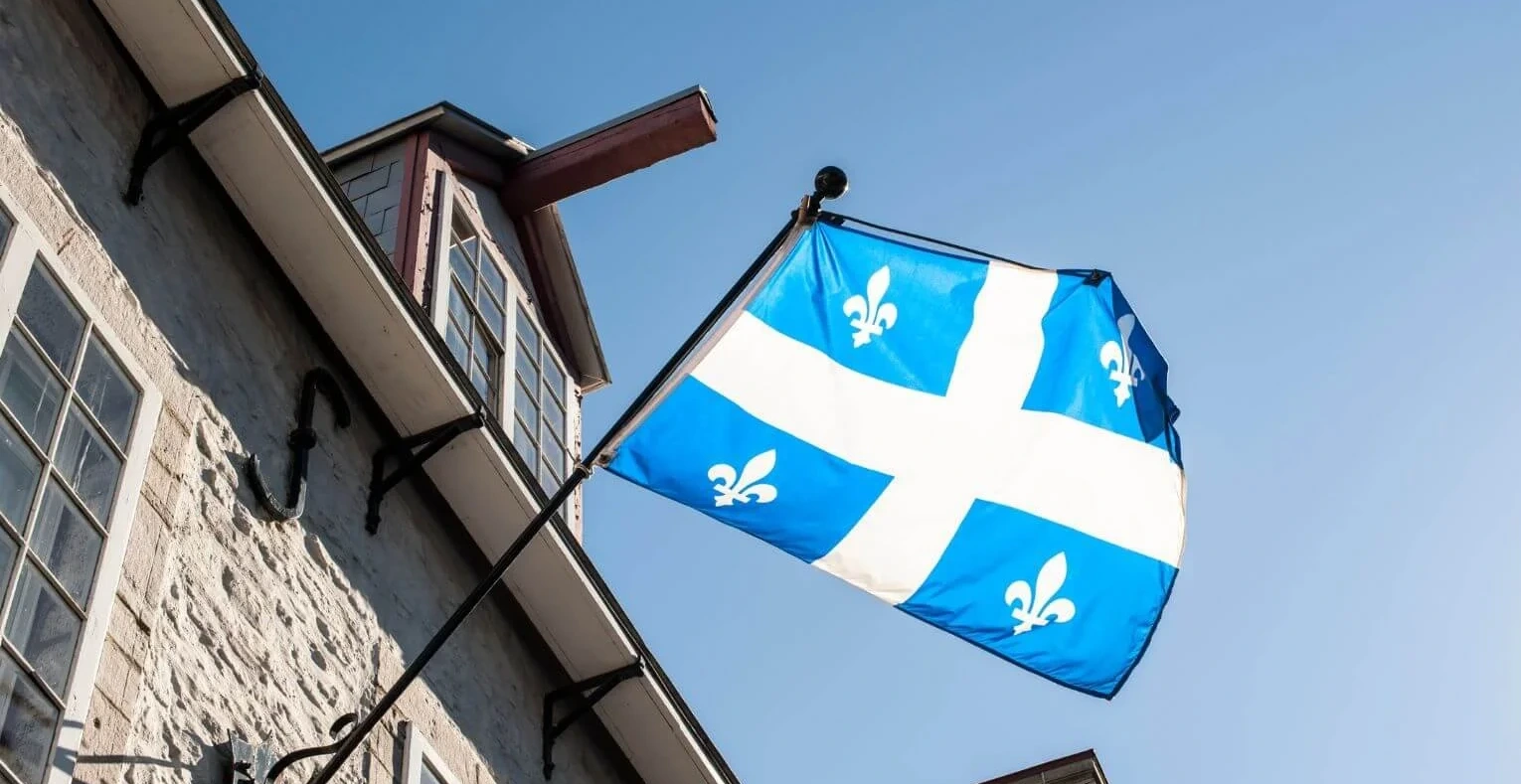
For any business operating in Quebec, selling to Quebec consumers, or employing Quebec residents, the Office québécois de la langue française (OQLF) sets the framework that governs how French must be present in commercial activity. Understanding these requirements is no longer optional. With Bill 96 reaching its full enforcement threshold in June 2025 and the OQLF processing thousands of complaints each year, the regulatory environment has tightened significantly for Canadian and international businesses.
This guide outlines what the OQLF requires from businesses doing business in Quebec, organized around the practical obligations that companies need to address before they expand, hire, or sell in the province.
Who Is the OQLF and What Does It Enforce
The Office québécois de la langue française is the provincial agency responsible for enforcing Quebec’s Charter of the French Language, commonly known as Bill 101, and its 2022 modernization through Bill 96. The OQLF oversees compliance across nearly every dimension of commercial activity in Quebec: workplace communications, customer service, product labeling, signage, advertising, contracts, websites, and corporate documentation.
The OQLF operates an active enforcement infrastructure. In 2022-23 alone, the agency received nearly 6,900 language-related complaints, conducted hundreds of inspections, and issued sanctions against non-compliant businesses. Fines for non-compliance range from CAD 3,000 to CAD 30,000 per offense, with penalties doubled for repeat violations. Beyond financial penalties, non-compliance can result in loss of public contracts, reputational damage, and legal exposure in commercial disputes where the French version of documents may take legal precedence.
For businesses, the practical implication is straightforward: OQLF compliance is not a marketing aspiration but a regulatory baseline that must be respected to operate in Quebec.
Workplace and Employment Obligations
The most operationally demanding OQLF requirements relate to workplace and employment practices. Quebec law establishes French as the working language of businesses operating in the province, with specific obligations that scale with company size.
For all businesses with Quebec employees, the right of employees to work in French applies regardless of company size. This means employment contracts, internal communications, workplace policies, training materials, and HR documentation must be available in French. Employees cannot be required to know a language other than French as a condition of employment unless the role specifically demands it.
For businesses with 25 or more employees in Quebec (the threshold lowered from 50 by Bill 96 as of June 2025), formal francisation program requirements apply. These businesses must register with the OQLF, undergo a linguistic analysis, develop a written francisation program, and progressively adopt French as the working language across all operations. Once compliance is achieved, the OQLF issues a francisation certificate confirming the company’s status. Frenchside provides specialized francization translation services to support businesses through this process.
For businesses with 100 or more employees, an internal francisation committee is required to oversee the program. This committee includes employee representatives and is responsible for monitoring the implementation of the francisation plan within the organization.
The francization framework applies regardless of where the company is headquartered. International businesses with Quebec operations face the same obligations as Quebec-based businesses, with the same employee thresholds determining the scope of formal francisation requirements.
Consumer-Facing Obligations: Signage, Packaging, and Advertising
Quebec law imposes specific obligations on the visible commercial communications businesses present to consumers. These obligations are particularly important for retailers, manufacturers, restaurants, and any business serving Quebec consumers directly.
- Signage and commercial visibility must respect French predominance requirements. Storefront signs, in-store displays, point-of-sale materials, and visible commercial communication in Quebec must include French, and in many cases French must be more prominent than any other language. Bill 96 has reinforced these requirements, with stricter rules on the visibility and prominence of French on commercial signage.
- Product packaging and labeling must include French alongside any other language used. Products sold in Quebec, regardless of where they are manufactured, must comply with French-language packaging requirements covering product names, descriptions, ingredient lists, instructions for use, safety warnings, and any text appearing on packaging. Frenchside provides specialized packaging and label translation services for businesses meeting these obligations.
- Advertising and marketing materials distributed in Quebec must be available in French. This applies to print advertising, digital marketing, direct mail, point-of-sale promotional materials, and any commercial communication targeting Quebec consumers. The French version is generally required to be at least equally prominent as any other language version.
- Websites and digital commerce accessible to Quebec consumers must offer French versions. E-commerce platforms, business websites, customer portals, and digital interfaces serving the Quebec market must provide French content for product information, terms and conditions, customer service interactions, and consumer-facing communications.
Contracts, Legal Documents, and Customer Communications
Bill 96 has significantly reinforced obligations around contracts and customer-facing legal documents in Quebec.
Contracts of adhesion, which are standard-form contracts presented to consumers without negotiation, must be available in French. Insurance policies, bank account agreements, telecommunication contracts, software licensing agreements, and standard service contracts all fall into this category. Crucially, in many cases the French version takes legal precedence in disputes, which means the quality and accuracy of French translation has direct legal consequences.
Employment contracts in Quebec must be available in French, with the French version generally taking legal precedence. Employees have the right to receive their employment contract, employee handbook, and workplace communications in French.
Customer service communications, including written communications, email templates, customer service scripts, and any direct interaction with Quebec consumers, must be available in French. Bill 96 reinforced the right of consumers to be served in French throughout their commercial interactions.
Negotiated contracts between sophisticated parties are subject to different rules and may be drafted in another language by mutual agreement, but standard customer-facing contracts cannot escape the French-language requirement through contractual provisions alone.
How Compliance Is Monitored and Enforced?
The OQLF has multiple mechanisms for identifying non-compliance and taking enforcement action against businesses that fail to meet their obligations.
- Consumer complaints are the most common trigger for OQLF action. Any Quebec consumer can file a complaint with the OQLF if they encounter non-compliant signage, packaging, customer service, or commercial communication. The OQLF processes thousands of these complaints each year and follows up with the businesses involved.
- Proactive inspections are conducted by OQLF inspectors who visit businesses, retail locations, and commercial establishments to verify compliance with signage, packaging, and customer service obligations.
- Francization program reviews are conducted as part of the formal francisation process, with the OQLF assessing whether businesses are meeting their progressive francisation obligations.
- Audit and investigation can be triggered when patterns of non-compliance suggest systematic issues. Bill 96 has expanded the OQLF’s investigative powers and the range of sanctions available for non-compliant businesses.
When non-compliance is identified, the OQLF typically issues a notice requiring the business to correct the issue within a defined timeframe. Failure to correct can result in formal sanctions, including fines, public listings of non-compliant businesses, and in serious cases, restrictions on commercial activity in Quebec.
Practical Steps for Businesses Entering or Expanding in Quebec
Businesses preparing to enter the Quebec market or expand their Quebec operations should approach OQLF compliance methodically. The following steps address the most common obligations and help businesses avoid the typical compliance gaps that trigger OQLF action.
- Audit your current French-language footprint: identify which of your current materials, communications, contracts, and digital platforms are already available in French, and which require translation to meet Quebec obligations.
- Plan for employment and HR documentation: if you employ or plan to employ Quebec residents, ensure that employment contracts, employee handbooks, workplace policies, and HR communications are available in French. For businesses approaching the 25-employee threshold, plan for the broader francisation program requirements that will apply.
- Address consumer-facing materials early: signage, packaging, websites, and advertising materials are the most visible compliance dimensions and the most likely to trigger consumer complaints. Address these before launching commercial activity in Quebec rather than retroactively.
- Translate contracts of adhesion and customer-facing legal documents: any standard contract presented to Quebec consumers must be available in French, and the quality of translation has direct legal consequences. Generic translation work is not sufficient for these documents. Trust our French legal translation company for your project.
- Establish ongoing translation capacity: OQLF compliance is not a one-time project but an ongoing operational requirement. New materials, updated policies, recurring communications, and new product launches all generate new translation needs that must be addressed continuously.
- Coordinate with specialized translation partners: Quebec French has its own conventions, terminology, and regulatory expectations that differ from European French and from generic Canadian French. Partnering with a translation agency specialized in Quebec French and familiar with the OQLF framework is significantly more efficient than working with generalist providers unfamiliar with the regulatory context.
How Frenchside Supports OQLF Compliance
Frenchside is a specialized Canadian French translation agency built around the operational demands of Quebec compliance. Since 2014, we have supported Canadian and international businesses with the translation work needed to meet OQLF obligations across employment documentation, customer-facing materials, contracts, packaging, and digital interfaces.
Our team includes native Canadian French and Quebec French translators with direct experience in the OQLF framework, the Charter of the French Language, and Bill 96 obligations. We maintain dedicated translation memory and terminology databases for Quebec compliance projects, ensuring consistency across multiple documents and ongoing client relationships. Every translation passes through a 100 percent internal revision workflow, with a second certified linguist verifying accuracy, terminology alignment, and regulatory expectations.
For businesses navigating OQLF compliance, whether starting their Quebec expansion, adapting to the new 25-employee threshold under Bill 96, or maintaining ongoing compliance after certification, Frenchside provides the specialized translation capacity required at each stage of the process.
Disclaimer: This article provides general information about OQLF requirements to help businesses understand their potential obligations. It does not constitute legal advice. For specific legal questions about your compliance obligations, please consult a Quebec-licensed attorney specialized in language law and commercial regulation, or a certified francisation consultant.