There is a story Canadian marketers tell themselves about Tim Hortons and Quebec — that the chain conquered the province because it is, in some essential way, Canadian, and Quebec is part of Canada, so the affection naturally flowed. The story is wrong in the order it gets things. Tim Hortons did not arrive in Quebec and find a welcoming audience. Ron Joyce, the man who built the chain into a national institution, admitted in his own biography that he waited too long to enter Quebec, and that he left the entire market to Dunkin’ Donuts in the meantime. For more than two decades after the chain’s 1964 founding in Hamilton, the Quebec coffee-and-doughnut category belonged to someone else — and the someone else was a US import that had figured out the province first.
What turned that around is not the kind of story that appears in case studies on Canadian retail. It is a slower, less heroic story about a national brand learning that operating in Quebec is not a translation problem. It is a localization problem, a regulatory problem, a brand-identity problem and a content-production problem, all at once — and the brands that get this right do so by treating Quebec as a market that needs original work in French, not a market that needs the English work translated. That distinction is the entire lesson.
The apostrophe that disappeared in 1993
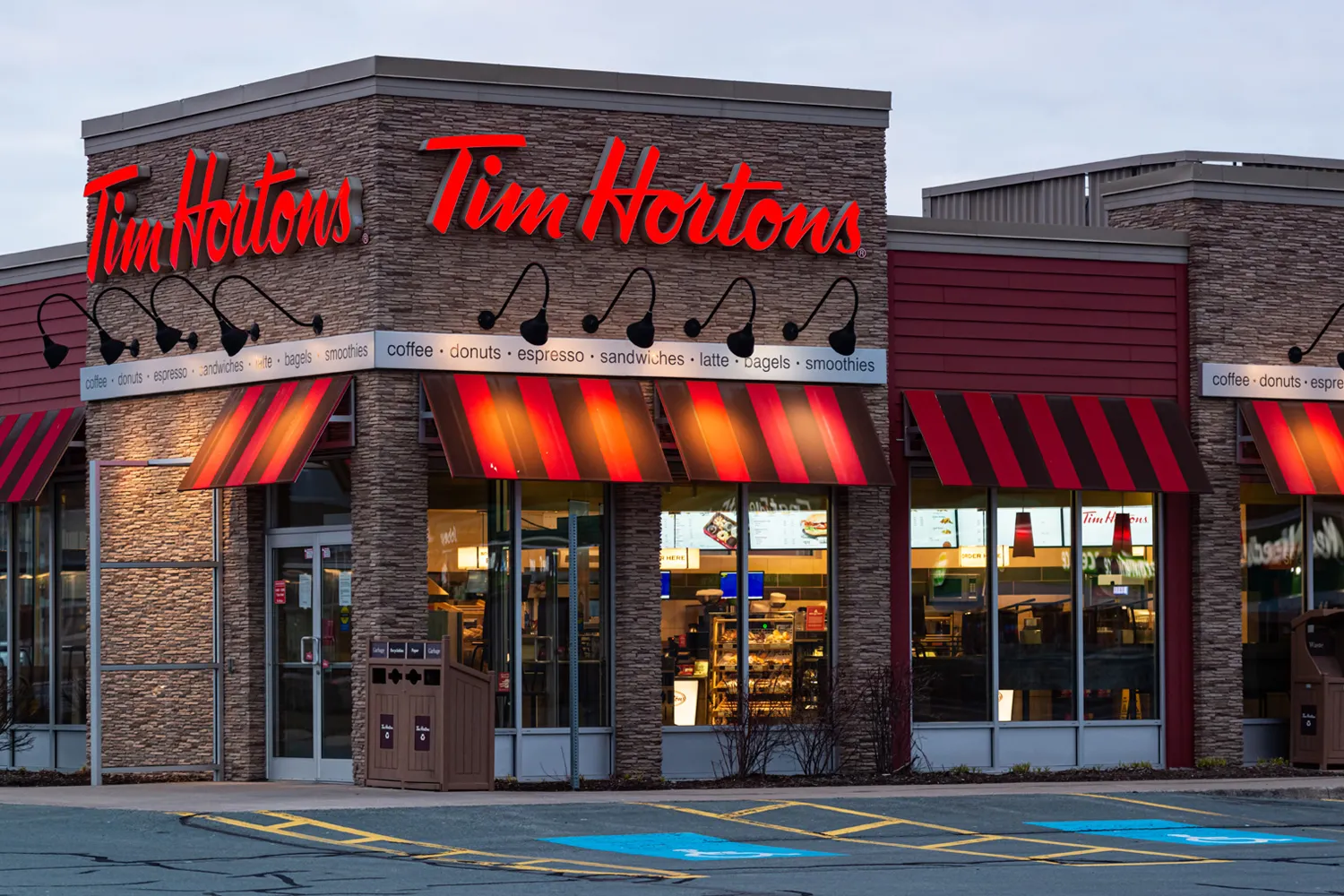
The most visible artefact of Tim Hortons’ relationship with Quebec is something the chain dropped: the apostrophe in its name. The original 1964 spelling was “Tim Horton’s” — the standard English possessive, like Wendy’s or McDonald’s. By the early 1990s, that apostrophe had become a problem. In 1993, the chain removed the apostrophe and became simply “Tim Hortons,” in response to Quebec’s language laws, which require signage to comply with French linguistic standards. The change was not merely a legal adjustment but also a gesture of respect toward the local culture and a commitment to integration.
The technical reason is that Bill 101 — the Charter of the French Language passed by the Parti Québécois government in 1977 — made French the official language of Quebec, mandated that all labels, menus and public signs be written in French, and treated the apostrophe as English punctuation that fell under the same restrictions as other English spellings. Faced with the choice of maintaining two different brand spellings depending on the province, or unifying behind a single spelling that would not put the chain in regulatory tension with Quebec, Tim Hortons chose to drop the apostrophe everywhere — including in English Canada and the United States.
This is a small thing and a large thing at the same time. Small, because it is one punctuation mark. Large, because it tells you what kind of brand decision Quebec forces on national operators. You do not get to keep your “preferred” branding and treat the French version as a derivative. You either build a brand that works in French legally and culturally, or you build a brand that has friction in Quebec. There is no third option. Tim Hortons made the choice in 1993; the brands that arrived in Quebec later, with apostrophes intact, learned the same lesson on a slower curve.
“Toujours frais” was not a translation. That is the point.
The English Tim Hortons positioning has always relied on the campaign architecture of “True Stories” — narrative ads about ordinary Canadians in moments where Tim Hortons functions as a backdrop to identity, hockey, family, endurance. In Quebec, those ads were broadcast as “Histoires Vécues,” but academic analysis of the campaign found that they were for the most part translations of the English-language ads — a formally bilingual policy that glossed over the cultural distance between English and French Canada rather than addressing it.
Translating an ad campaign is the cheap way to enter a market. It is also the way you stay second. What changed Tim Hortons’ Quebec trajectory was the move from translated content to original Quebec-French creative — a shift visible in everything from the chain’s tagline strategy to its product calendar to its celebrity endorsements.
The tagline itself tells the story. In English Canada, Tim Hortons leans on “Always Fresh.” In Quebec, the tagline became “Toujours Frais” — a literal translation, yes, but used independently and given equal weight to the English version. Marketing analyses of the chain’s repositioning under Ron Joyce credit “Toujours Frais” as a distinctive slogan that helped the brand step away from the hockey-only positioning and establish a clearer identity in francophone markets. The tagline is now sometimes used as the French commercial designation alongside the protected name, including on storefront signage configurations that Quebec’s evolving signage rules treat as compliant.
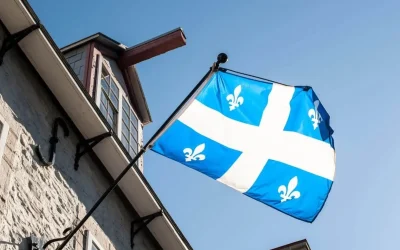
The product calendar tells a different version of the same story. In December 2010, Tim Hortons launched its holiday cup collection with two versions: for Quebec, the cups replaced the maple leaf with a snowflake and removed the CN Tower, reflecting the brand’s attention to regional differences and its commitment to tailoring its messaging. A maple leaf is “Canadian” in the symbolic shorthand of English Canada; in Quebec, it is the federal flag, with all the political associations that carries. The CN Tower is a Toronto landmark that does not warm a Quebec heart. Replacing both is not a translation decision. It is a recognition that the symbols mean different things across the two solitudes, and that a national brand needs symbols that carry warmly in the market where the cup will actually sit on the table.
The celebrity strategy: hire Quebec, not translate Canada
The campaigns that have moved Tim Hortons forward in Quebec over the last decade share a structural feature: they are produced for Quebec, with Quebec talent, by a Quebec creative agency. In late 2024, Tim Hortons appointed Publicis Montreal as its lead communication agency for Quebec, with Publicis explicitly positioning the work around the principle that few national QSR brands actually create messages and campaigns rooted in Quebec culture, and that Tims has historically run specific campaigns to acknowledge the importance of the Quebec market and continues to tailor multiple campaigns each year to the province.
The most recent example is concrete enough to study. In 2025, Tim Hortons adapted its “Greatest Duos” hockey card campaign for Quebec by featuring Montreal Canadiens captain Nick Suzuki alongside an actor comically personifying head coach Martin St-Louis — a Quebec-specific creative produced separately from the English-language campaign, which featured Matthew and Brady Tkachuk and their father Keith. Tim Hortons’ senior marketing manager explained the choice in straightforward terms: “Through this campaign, we wished to curate a unique creative that would reach and resonate with Quebecers… Quebec is an important market for Tims, and as Quebecers often say: ‘Hockey is a religion in Quebec’.”
Read that again, because it is the actual lesson. The same campaign concept (collectible hockey cards, family duos, brand-as-backdrop), produced as two separate creative executions with two separate sets of talent. Not one ad translated. Two ads written. The English version uses American hockey royalty; the French version uses the captain of the most culturally loaded NHL team in Quebec. A translation would have produced a French voiceover over Tkachuk footage. The actual campaign produced a Suzuki ad that Quebecers can claim as their own.
Why this matters for any Canadian brand selling into Quebec
The Tim Hortons story is unusual in scale but typical in pattern. Almost every Canadian or US brand that has built durable share in Quebec has gone through a version of the same arc: start with translated content, plateau, realise the plateau is structural, and shift to original French production. The brands that skip the plateau — that arrive in Quebec already committed to Quebec-original creative, Quebec-original product calendars, Quebec-original signage and naming decisions — get there faster. The brands that resist tend to spend ten or fifteen years with sub-scale Quebec performance before someone in marketing finally insists.
Three concrete operating decisions separate the two trajectories.
The first is language compliance treated as a baseline, not a project. Quebec’s Charter of the French Language has been the law since 1977, and Bill 96 substantially reinforced it in 2022. Signage, product packaging, contracts of adhesion, employment documentation, websites and customer service flows must all be available in French, with the French version at least as accessible and prominent as any other-language version. The brands that handle this well treat compliance as an operational baseline — built into product launches, contract templates, store openings and digital releases from day one — rather than as a remediation programme triggered by a regulator’s letter. Tim Hortons internalised this in the 1990s with the apostrophe decision; it took most US brands until the mid-2010s to catch up.
The second is Canadian French as a creative discipline, not a translation specification. Quebec audiences read advertising, packaging, product names, websites and service interactions in Canadian French — a variant with its own vocabulary, its own register, its own cultural references and its own relationship with anglicisms (which Quebec French generally avoids more strictly than European French). A campaign written in English and run through translation, however careful, almost always reads as foreign. A campaign whose copy was conceived in Canadian French from the first creative brief reads as native. The cost difference is real but smaller than people assume; the performance difference is large and compounding.
The third is localisation extended to symbols, not just words. The 2010 cup decision (snowflake instead of maple leaf, no CN Tower) is the prototype. National brands that operate well in Quebec carry a parallel symbolic vocabulary — different jersey, different landmarks, different holiday calendar (Saint-Jean-Baptiste matters, the Canada Day relationship is more complicated), different celebrity faces, different humour register. The brands that get this right do not see it as concession; they see it as the cost of being a real player in a real market that happens to share a country with them.
A practical takeaway for marketing and procurement teams
If your brand sells into Quebec and you are reviewing your French-language strategy, the Tim Hortons trajectory suggests three questions worth putting on the table.
Is your French content produced in French, or translated into French? The two are not the same thing, and Quebec audiences can tell the difference within the first sentence. Producing original French copy — for taglines, campaign concepts, product names, social content, customer-facing emails — costs more than running everything through translation, but it produces measurably different brand response.
Is your Quebec presence treated as a separate market with its own calendar, or as a sub-market of English Canada? Tim Hortons’ product launches, holiday designs, advertising flights and celebrity partnerships in Quebec follow a Quebec-specific calendar — including, when the cultural moment calls for it, products and signals that simply do not exist in English Canada. This is the operational corollary of taking the market seriously.
Is your French-language partner ecosystem built for translation alone, or for the broader work? A translation vendor that sends you a translated PDF is solving 30% of the problem. The other 70% is in the briefing, the cultural review, the regulatory check, the variant decisions, the terminology consistency across hundreds of touchpoints, and the recurring partnership that lets your French content keep pace with your English content rather than trailing it. The agencies that get Quebec right are the ones their clients treat as creative partners, not commodity suppliers.
Tim Hortons did not become Canada’s most-aired television advertiser by accident, and the fact that in late 2023, Tim Hortons was the top television advertiser in the Montreal market, ahead of McDonald’s — in a province where it once trailed Dunkin’ Donuts for two decades — is a quiet but unmistakable measure of how far the localisation discipline can take a brand. The chain’s Quebec story is not really about coffee, or about hockey, or about doughnuts. It is about a national operator that learned, over thirty years, to do the work in French rather than over the work in English. Every Canadian brand selling into Quebec has the same opportunity, and the same lesson available to skip.
If you are working through your own Quebec-French strategy and want a quick read on what your current content actually communicates to a Quebec audience — translated or produced, native or foreign, compliant or marginal — send a sample to [email protected]. We will come back with an honest assessment, free and with no commitment.